
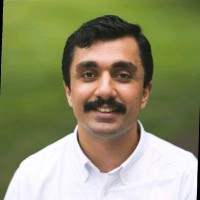
Muhammad Abubakar Khan is a postdoc in biochemistry and microbiology in the Madden and Cramer Labs. He was recently elected to the Dartmouth Postdoctoral Association (DPA) executive board as co-president.
What do you consider your hometown, and how has it shaped who you are today?
I’m from Lahore, Pakistan, a vibrant city known for its diverse place known for its culture, arts, history and hospitality. Growing up in Lahore, where stories, food and community are core to daily life, has instilled in me a passion for connecting with people and celebrating diversity. As a proud Lahori, I thrive in multicultural environments, value collaborative problem-solving and approach science with creativity. My love for food (nothing beats biryani or haleem with fresh naan from the clay oven) and the arts has taught me to appreciate both tradition and innovation. I’ve carried this mindset to Dartmouth, where I’ve found purpose in helping others, building community and bridging diverse experiences.
Can you tell us about your current research at Dartmouth and what excites you most about it?
I work in Dean Madden’s lab (biochemistry),and Cramer Lab (microbiology) investigating how the fungus Aspergillus fumigatus adapts to low-oxygen environments using biochemistry, genetics and molecular biology. What excited me is exploring unconventional survival pathways in this medically important fungus (pathogen); work that lays the foundation for future antifungal therapies. Collaborating across departments had deepened my appreciation for interdisciplinary science and innovative problem solving, preparing me to tackle complex challenges both in and outside the lab.
What is your academic background? Where did you complete your graduate studies, and what led you to pursue a postdoc?
My academic journey began at Lahore University of Management sciences (LUMS) in Lahore, where I completed a BSc and conducted research in both plant and animal models. I recently completed my PhD at Dartmouth in the Madden Lab where I was fortunate to work with and learn from outstanding scientists. Staying on as a postdoc has allowed me to deepen my work, and expand my skills before transitioning into industry. Dartmouth has been a place of immense growth, mentorship, and opportunities to lead and innovate.
What inspired you to pursue a postdoc position at Dartmouth?
After finishing my PhD, I wanted to continue key research projects and capitalize on Dartmouth’s supportive community. While my long-term interest lies in industry and consulting, postdoctoral training here lets me contribute further to science, build new skills in leadership and project management, and help bridge academia and real-world impact.
As a member of the Dartmouth Postdoc Association’s executive board, what motivated you to get involved, and what do you hope to accomplish in this role?
As an active member of the Dartmouth community, I’ve led the International Graduate Mentorship Program and the Biotech Club, expanding professional opportunities and advocating for international scholars. I’m honored to be a 2023 Guarini Diversity Award recipient for this work. Serving as DPA co-president, I aim to strengthen communication, increase resources, and foster inclusive networks that empower every postdoc. My goal is to ensure postdocs feel connected, supported and positioned for success in their chosen careers.
What advice would you give to those currently pursuing their PhDs about making the most of their time at Dartmouth?
Engage beyond the lab! Dartmouth offers a wealth of resources, mentors and learning opportunities. Reach out, ask questions, and don’t hesitate to seek guidance; the community is incredibly supportive. Embrace the unique environment to build meaningful relationships and explore interests outside your main research. Let your time here shape both your scientific vision and your personal growth. You’ll be amazed what you can achieve, and who you can become by being open and productive.
What are your career goals after your postdoc?
I am passionate about working at the intersection of science and business, leveraging my technical expertise to solve complex problems and drive innovation. My experience in biotech and the Tuck Business Bridge Program has fuelled my interest in life science consulting, where I hope to help organizations create real-world impact with scientific advancements.
Which resources, career support programs, or professional development opportunities at Dartmouth have been most valuable to you, and how have they impacted your experience?
Building the Dartmouth Biotech Club from the ground up was transformative; collaborating with alumni and campus partners from Tuck, Giesel, Thayer and Technology Transfer Office provided practical leadership experience. The Magnuson Center has been invaluable for exploring non-academic career paths, and Tuck School resources, including the Business Bridge Program, equipped me with business fundamentals. I’m grateful to mentors like Amy Keeler, Berry Schewitzer, Cindy Rosalbo, and Kerry Landers, who have offered guidance and support throughout my journey.
Beyond research, what hobbies or activities do you enjoy in the Upper Valley?
As someone who has always participated in competitive sports, staying active is essential to me. I enjoy playing soccer, running and regular workouts at the Alumni Gym. The Upper Valleys hiking trails provide outdoor adventures and I’m working towards finishing the NH 4000-footers. Arts and crafts also remain close to my heart, inspired by my upbringing in Lahore, a city rich in artistic traditions and creative expression. I look forward to attending events at the newly reopened Hopkins Center. Whether I’m enjoying a home-cooked meal reminiscent of Lahore’s flavors or exploring local arts and events, I find ways to stay connected to my roots while embracing all that Dartmouth and the Upper Valley have to offer. This blend of cultures and passions continues to energize and inspire me every day.
