

New research led by Jonathan Winter, with contributions from Janelle Wargo, Guarini ’25 (earth and planetary sciences), finds that rising precipitation — not just warming — is driving fewer, milder droughts across the Northeast. The catch: more rain also means more severe …
Alumni in the News

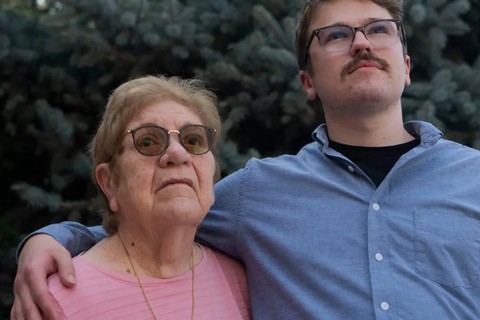
Jacob Campbell, Guarini ’26 (masters of liberal arts studies), lost his mother in the Sept. 11 attacks as a baby. He began his documentary, “Those Left Behind,” as a course project. His award-winning documentary explores grief, memory, and family. Read more …
By
Read more 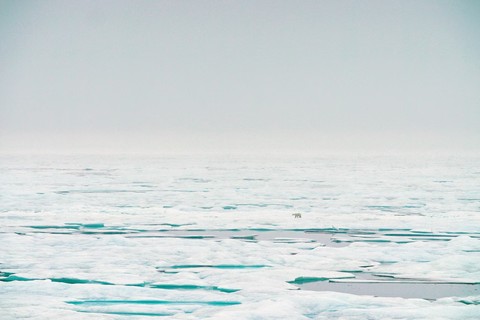
Melody Brown Burkins, Guarini ’95, ’98, director of Dartmouth’s Institute of Arctic Studies, is quoted in an article on the National Oceanic and Atmospheric Administration’s (NOAA) decision to end support for the 2026 Arctic Report Card, an annual assessment of …
By
Read more 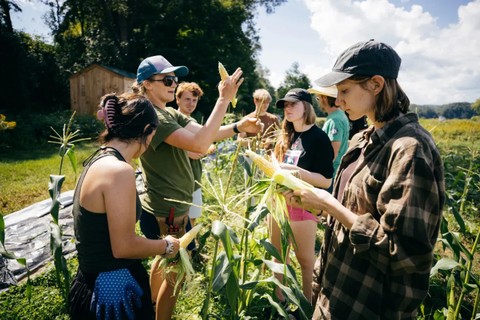
What keeps people cooperating on issues like vaccination and climate action? A new study by Alina Glaubitz, Guarini ’24 (mathematics), and professor Feng Fu finds steady rewards work better than punishment. Read more.
By
Read more 
Amanda “AJ” Haskins, Guarini ’24 (psychological and brain sciences) led a study as a grad student, finding that our eye movements are so distinctive an AI model can use them to tell people apart. The findings could one day help …
By
Read more 
Ivory Yang GR ’25 (computer science) joined BBC World Service to discuss her AI tool built to help preserve Nüshu, her grandmother’s endangered language. “It has a lot of meaning in society, so that is why I do the work …
By
Read more 
Rebecca “Beccy” Abraham GR ’26, who earned their MFA in sonic practice, spent the past year minding the iconic Baker Library bells and organized a concert to celebrate their centennial. Their story is featured in the inaugural issue of SPARK’D, …
By
Read more 
Reng Zhao, Guarini ’26 (MALS, Creative Writing, Nonfiction), was awarded the 2026 Byam Shaw-Brownstone Thesis Excellence Award for her thesis, The Flow of Ink: A Journey through Calligraphy, Culture, and the Self, a memoir weaving fieldwork and Chinese history into …
By
Read more 
Sophie Wohltjen, GR ’22, is quoted in an Upworthy piece on research finding that people’s minds wander during conversations about 24% of the time — and that most of us are bad at noticing when it happens. Read more on Upworthy.
By
Read more 
Mary Kieseler, GR ’25 (psychological and brain sciences), led a study showing octopuses can use mirrors to locate hidden prey, a spatial skill never before documented in invertebrates. The findings suggest these ancient creatures may have independently evolved their own …
By
Read more 


